
Palm Sunday (Palmarum)
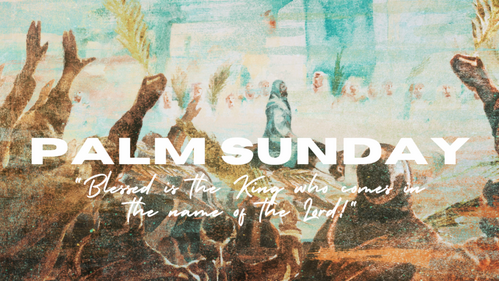
Palm Sunday commemorates Jesus's triumphal entry into Jerusalem and the fulfillment of the prophecy recorded centuries earlier in Zechariah 9:9. Palm Sunday marks the beginning of the last week of Jesus' life (i.e., prior to His crucifixion), a period many Christians know as Holy Week or Passion Week.
I'm not much on sports metaphors, but as I thought about the events of Holy Week, March Madness drifted into my mind. The up or out nature of the college basketball "playoffs" can indeed lead to unexpected, even irrational outcomes, but they pale compared to the madness, from a human perspective, of Holy Week.
From His encounter with a Samaritan woman at Jacob's well, and turning water into wine at a wedding feast in Cana, Jesus would take His message, ministry, and his followers on a three-year journey. It seems that Jesus' ministry reached a climax of sorts at Bethany, when He called a four-days dead Lazarus out of his tomb. Many saw the event, and many believed, but John 11:46 (ESV) tells us that "some of them went to the Pharisees and told them what Jesus had done." The Pharisees feared mostly that the increasing interest in Jesus would lead to big trouble with Rome. Caiaphas, the (nominal) high priest that year, prophesied (!) Jesus' death as told in John 11: 49-50, saying "it is better for you that one man should die for the people, not that the whole nation should perish.” What he said was true and the key to God's plan for salvation for all of humankind, but Caiaphas had no idea what he really was saying! At any rate, the plot to kill Jesus started with this backlash to Lazarus' resurrection.
The Jewish leadership wondered whether Jesus would show up for the (fast-approaching) Passover in Jerusalem. Luke 9:51 (ESV) says that Jesus set his face to go to Jerusalem. Matters came to a head on the first day of the week (Sunday) prior to the Passover. Matthew 21 tells us "when they drew near to Jerusalem and came to Bethphage, to the Mount of Olives, then Jesus sent two disciples, saying to them, "Go into the village in front of you, and immediately you will find a donkey tied, and a colt with her. Untie them and bring them to me. If anyone says anything to you, you shall say, ‘The Lord needs them,’ and he will send them at once.” They got the animals, put their cloaks on them, Jesus sat on them, and off they went... into Jerusalem.
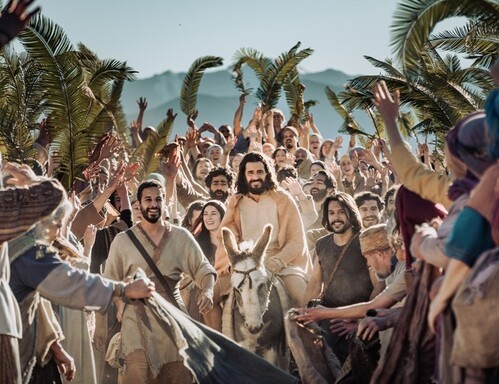
Seeing this man, known to many already for His words and His actions, riding into town on "the colt, the foal of a donkey", everybody knew what was going on – yes, everybody, including those focused on killing this rabble-rousing Jesus. And since it was Passover season, Jerusalem was packed. Ecstatic people lined the street, waving palm branches. Many, many people responded to seeing fulfillment of Zechariah's prophecy in the flesh by doing their part, calling out in response with language taken from Psalm 118. The atmosphere must have been electrifying! March madness!
But things would only get madder. Within days, that same crowd crying Hosanna (literally "Save us, please!") would be yelling "Crucify him!". Holy Week traces the madness that leads humans – God's creation – to kill the author of Life.
Jesus hit Jerusalem hard, cleaning out the Temple and engaging with the Pharisees over their hypocrisy and their lack of understanding. They had all the information that they needed, via the Law and the Prophets, to know exactly who Jesus was. The problem was that their head knowledge didn't translate into heart knowledge. Like the pharaoh of Egypt, way back in the time of that first Passover and the exodus of the then-enslaved "Children of Israel" at the start of their forty year sojourn to the Promised Land, the Pharisees’ hearts were hardened. The hearts of high priests Caiaphas and Annas (father-in-law of Caiaphas and the de facto authority at the time) were hardened. By the end of the week, the hearts of many of the multitude of Jews in Jerusalem had hardened, judging by their responses to Pilate as described in Mark 15 and Matthew 27. By Friday morning ("Good Friday"), Jesus' earthly fate was sealed. By Friday evening, His body was sealed in a tomb.
I think there are two important things to keep in mind when we think about the events of Holy Week.
1. Jesus' rather ramshackle entrance into Jerusalem ("lowly pomp", to quote the old Palm Sunday hymn, Ride On, Ride On in Majesty) might make us think of Cervantes' Don Quixote – but there's nothing quixotic about Jesus’ quest! The precise details of Jesus' triumphant entry were predicted by prophets centuries earlier. Not in obscure, flowery language, but exactly as prophesied. That certainly caught people's attention! On Palm Sunday, Jesus is on the verge of completing His mission, defeating sin and death once and for all, and reuniting humankind with our Creator. He's not tilting at windmills!
2. It's easy to see "the Jews" as the enemies in this story – but that misplaced resentment would miss the point entirely! The fickle, hard-hearted people in this story who in a very real sense are those who condemn Jesus to death... are us. Even so, we're not really the enemy. The enemy is the sin and evil that has had humankind under its spell since Genesis 3. We have been slaves to sin as the Children of Israel were slaves to the pharaoh of Egypt. But Jesus has his face set towards the enemy, and His goal is to rescue us.
In Romans 3:23, Paul's assessment (which I am taking slightly out of context) is pithy indeed: "for all have sinned and fall short of the glory of God,". Both Jew and Gentile. All. Romans 3:24 returns to Paul's context, which is the great Good News in, with, and under Holy Week's barrage of (seemingly) bad news: "and all are justified freely by his grace through the redemption that came by Christ Jesus." That redemption is the work that Jesus is riding into Jerusalem to finish, just days later, on the cross at Golgotha, and a few days after that by exiting the tomb, alive for ever and ever, on Easter morning.
If I may lumber back to my March Madness metaphor one final time: With His death on Good Friday and His resurrection on Easter Sunday, Jesus broke the curse. Not figuratively, but literally. Once and for all.
I'm not much on sports metaphors, but as I thought about the events of Holy Week, March Madness drifted into my mind. The up or out nature of the college basketball "playoffs" can indeed lead to unexpected, even irrational outcomes, but they pale compared to the madness, from a human perspective, of Holy Week.
From His encounter with a Samaritan woman at Jacob's well, and turning water into wine at a wedding feast in Cana, Jesus would take His message, ministry, and his followers on a three-year journey. It seems that Jesus' ministry reached a climax of sorts at Bethany, when He called a four-days dead Lazarus out of his tomb. Many saw the event, and many believed, but John 11:46 (ESV) tells us that "some of them went to the Pharisees and told them what Jesus had done." The Pharisees feared mostly that the increasing interest in Jesus would lead to big trouble with Rome. Caiaphas, the (nominal) high priest that year, prophesied (!) Jesus' death as told in John 11: 49-50, saying "it is better for you that one man should die for the people, not that the whole nation should perish.” What he said was true and the key to God's plan for salvation for all of humankind, but Caiaphas had no idea what he really was saying! At any rate, the plot to kill Jesus started with this backlash to Lazarus' resurrection.
The Jewish leadership wondered whether Jesus would show up for the (fast-approaching) Passover in Jerusalem. Luke 9:51 (ESV) says that Jesus set his face to go to Jerusalem. Matters came to a head on the first day of the week (Sunday) prior to the Passover. Matthew 21 tells us "when they drew near to Jerusalem and came to Bethphage, to the Mount of Olives, then Jesus sent two disciples, saying to them, "Go into the village in front of you, and immediately you will find a donkey tied, and a colt with her. Untie them and bring them to me. If anyone says anything to you, you shall say, ‘The Lord needs them,’ and he will send them at once.” They got the animals, put their cloaks on them, Jesus sat on them, and off they went... into Jerusalem.
Seeing this man, known to many already for His words and His actions, riding into town on "the colt, the foal of a donkey", everybody knew what was going on – yes, everybody, including those focused on killing this rabble-rousing Jesus. And since it was Passover season, Jerusalem was packed. Ecstatic people lined the street, waving palm branches. Many, many people responded to seeing fulfillment of Zechariah's prophecy in the flesh by doing their part, calling out in response with language taken from Psalm 118. The atmosphere must have been electrifying! March madness!
But things would only get madder. Within days, that same crowd crying Hosanna (literally "Save us, please!") would be yelling "Crucify him!". Holy Week traces the madness that leads humans – God's creation – to kill the author of Life.
Jesus hit Jerusalem hard, cleaning out the Temple and engaging with the Pharisees over their hypocrisy and their lack of understanding. They had all the information that they needed, via the Law and the Prophets, to know exactly who Jesus was. The problem was that their head knowledge didn't translate into heart knowledge. Like the pharaoh of Egypt, way back in the time of that first Passover and the exodus of the then-enslaved "Children of Israel" at the start of their forty year sojourn to the Promised Land, the Pharisees’ hearts were hardened. The hearts of high priests Caiaphas and Annas (father-in-law of Caiaphas and the de facto authority at the time) were hardened. By the end of the week, the hearts of many of the multitude of Jews in Jerusalem had hardened, judging by their responses to Pilate as described in Mark 15 and Matthew 27. By Friday morning ("Good Friday"), Jesus' earthly fate was sealed. By Friday evening, His body was sealed in a tomb.
I think there are two important things to keep in mind when we think about the events of Holy Week.
1. Jesus' rather ramshackle entrance into Jerusalem ("lowly pomp", to quote the old Palm Sunday hymn, Ride On, Ride On in Majesty) might make us think of Cervantes' Don Quixote – but there's nothing quixotic about Jesus’ quest! The precise details of Jesus' triumphant entry were predicted by prophets centuries earlier. Not in obscure, flowery language, but exactly as prophesied. That certainly caught people's attention! On Palm Sunday, Jesus is on the verge of completing His mission, defeating sin and death once and for all, and reuniting humankind with our Creator. He's not tilting at windmills!
2. It's easy to see "the Jews" as the enemies in this story – but that misplaced resentment would miss the point entirely! The fickle, hard-hearted people in this story who in a very real sense are those who condemn Jesus to death... are us. Even so, we're not really the enemy. The enemy is the sin and evil that has had humankind under its spell since Genesis 3. We have been slaves to sin as the Children of Israel were slaves to the pharaoh of Egypt. But Jesus has his face set towards the enemy, and His goal is to rescue us.
In Romans 3:23, Paul's assessment (which I am taking slightly out of context) is pithy indeed: "for all have sinned and fall short of the glory of God,". Both Jew and Gentile. All. Romans 3:24 returns to Paul's context, which is the great Good News in, with, and under Holy Week's barrage of (seemingly) bad news: "and all are justified freely by his grace through the redemption that came by Christ Jesus." That redemption is the work that Jesus is riding into Jerusalem to finish, just days later, on the cross at Golgotha, and a few days after that by exiting the tomb, alive for ever and ever, on Easter morning.
If I may lumber back to my March Madness metaphor one final time: With His death on Good Friday and His resurrection on Easter Sunday, Jesus broke the curse. Not figuratively, but literally. Once and for all.
Rejoice greatly, O daughter of Zion!
Shout aloud, O daughter of Jerusalem!
Behold, your king is coming to you;
righteous and having salvation is he,
humble and mounted on a donkey,
on a colt, the foal of a donkey. – Zechariah 9:9-12 (ESV)
Lord, save us!
Lord, grant us success!
Blessed is he who comes in the name of the Lord. – Psalm 118:25-26a (NIV)
As they approached Jerusalem and came to Bethphage on the Mount of Olives, Jesus sent two disciples, saying to them, “Go to the village ahead of you, and at once you will find a donkey tied there, with her colt by her. Untie them and bring them to me. If anyone says anything to you, say that the Lord needs them, and he will send them right away.”
This took place to fulfill what was spoken through the prophet:
“Say to Daughter Zion,
‘See, your king comes to you,
gentle and riding on a donkey,
and on a colt, the foal of a donkey.’”
The disciples went and did as Jesus had instructed them. They brought the donkey and the colt and placed their cloaks on them for Jesus to sit on. A very large crowd spread their cloaks on the road, while others cut branches from the trees and spread them on the road. The crowds that went ahead of him and those that followed shouted,
“Hosanna to the Son of David!”
“Blessed is he who comes in the name of the Lord!”
“Hosanna in the highest heaven!”
When Jesus entered Jerusalem, the whole city was stirred and asked, “Who is this?”
The crowds answered, “This is Jesus, the prophet from Nazareth in Galilee.” – Matthew 21:1-3, 6-11 (NIV)
Recent
Archive
2026
2025
January
February
March
April
May
June
September
2024
January
February
March
May
July
August
September
October
November
No Comments