
The Christmas Season - Epiphany

“But you will receive power when the Holy Spirit comes on you; and you will be my witnesses in Jerusalem, and in all Judea and Samaria, and to the ends of the earth.” – Acts 1:8 (NIV)
(Scripture Reading Opportunity: Matthew 2:1-23)
As I mentioned last week, Christmas, historically, wasn’t just one day (December 25th ). Christmas was celebrated as a festival period of 12 days, bookended by the birth of Christ at its beginning, and at its end by the celebration of Epiphany (January 6, in most church traditions).
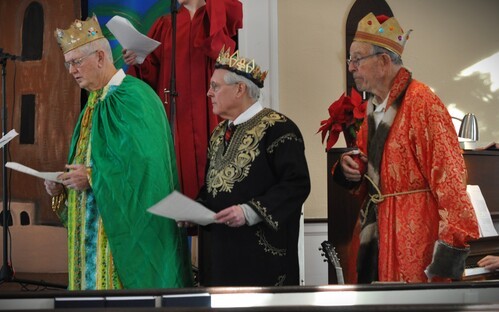
Epiphany was, and still is, a big part of the Christmas celebration. At our house, we don’t take down the decorations, nor stop listening to Christmas music, until January 6 is over. Epiphany commemorates the visit by the Magi (the "three wise men" -- see a 2016 version of which at the end of this post) to see the Christ, having seen a sign (the Star) in the skies. They followed it, and it led – to the King, whom they worshiped & to whom they presented gifts. We literally wouldn’t be here (in church, as Christians) if it weren’t for the outward focused part of Jesus’ ministry, which, it could be argued, started at Epiphany.
The word epiphany comes to us from the Greek, and means something like “a sudden manifestation of Deity to Mankind”. But I think I developed my understanding of the word epiphany far outside of the church. I have one of those flashbulb memories of a college class, “Contemporary American Letters” (it was the Seventies, after all!), reading James Joyce’s Dubliners. Dubliners is sort of Joyce with training wheels, suitable for beginners. I learned of Joyce’s religiously-informed, but decidedly secular take on the word epiphany.
The short stories of Dubliners feature various kinds of epiphanies. The “Joycean” definition of epiphany is a sudden spiritual manifestation, whether from some object, scene, event, or memorable phase of the mind — the manifestation being out of proportion to the significance or strictly logical relevance of whatever produces it. It can apply in any situation in which enlightenment allows the situation to be understood from a new, deeper perspective. I think of it as that kind of “A-ha!” insight. Now it all makes sense.
The Biblical Epiphany gives us that, too, doesn’t it? A sudden spiritual manifestation that gives a new perspective. The people of the "Old Testament" had an understanding of their long-awaited Messiah. He would come to restore God's relationship with His Chosen People, and to make things good for them... perhaps in a geopolitical sense. The rest of the world were the Bad Guys; Godless Gentiles, right?
But the Old Testament looks a lot different after Jesus’ birth, looking back on it. The prophecies and the comforting message contained in the Old Testament become much clearer, even though they're mixed in with all of those arcane regulations in Leviticus, and the trauma and bloodshed in the more historical books. Those messages of promise, redemption and comfort were understood by the Old Testament’s “contemporary” audience to refer to a Messiah. The Epiphany revealed that Messiah, not just to the Jews, but even to the rest of the world. Now that's an Epiphany!
The Messiah, Jesus, the Christ, really came. He was born of a woman and lived as a human being. He conducted a ministry, He ate and drank. He laughed and cried, and He was tempted. Ultimately, He suffered and died on a cross (a brutal form of execution set aside for only the worst sort of criminal or revolutionary). He was buried... but He rose again on Easter Sunday, and He lives (present tense)! He’s really here, and – maybe most important to “the rest of the world”, He came for everyone. That was the new perspective of the Epiphany that we celebrate on January 6th.
Joyce couldn’t have written it better himself.
(originally published, in a slightly different form, as a "Musing from the Pew" in 2018)
As I mentioned last week, Christmas, historically, wasn’t just one day (December 25th ). Christmas was celebrated as a festival period of 12 days, bookended by the birth of Christ at its beginning, and at its end by the celebration of Epiphany (January 6, in most church traditions).
Epiphany was, and still is, a big part of the Christmas celebration. At our house, we don’t take down the decorations, nor stop listening to Christmas music, until January 6 is over. Epiphany commemorates the visit by the Magi (the "three wise men" -- see a 2016 version of which at the end of this post) to see the Christ, having seen a sign (the Star) in the skies. They followed it, and it led – to the King, whom they worshiped & to whom they presented gifts. We literally wouldn’t be here (in church, as Christians) if it weren’t for the outward focused part of Jesus’ ministry, which, it could be argued, started at Epiphany.
The word epiphany comes to us from the Greek, and means something like “a sudden manifestation of Deity to Mankind”. But I think I developed my understanding of the word epiphany far outside of the church. I have one of those flashbulb memories of a college class, “Contemporary American Letters” (it was the Seventies, after all!), reading James Joyce’s Dubliners. Dubliners is sort of Joyce with training wheels, suitable for beginners. I learned of Joyce’s religiously-informed, but decidedly secular take on the word epiphany.
The short stories of Dubliners feature various kinds of epiphanies. The “Joycean” definition of epiphany is a sudden spiritual manifestation, whether from some object, scene, event, or memorable phase of the mind — the manifestation being out of proportion to the significance or strictly logical relevance of whatever produces it. It can apply in any situation in which enlightenment allows the situation to be understood from a new, deeper perspective. I think of it as that kind of “A-ha!” insight. Now it all makes sense.
The Biblical Epiphany gives us that, too, doesn’t it? A sudden spiritual manifestation that gives a new perspective. The people of the "Old Testament" had an understanding of their long-awaited Messiah. He would come to restore God's relationship with His Chosen People, and to make things good for them... perhaps in a geopolitical sense. The rest of the world were the Bad Guys; Godless Gentiles, right?
But the Old Testament looks a lot different after Jesus’ birth, looking back on it. The prophecies and the comforting message contained in the Old Testament become much clearer, even though they're mixed in with all of those arcane regulations in Leviticus, and the trauma and bloodshed in the more historical books. Those messages of promise, redemption and comfort were understood by the Old Testament’s “contemporary” audience to refer to a Messiah. The Epiphany revealed that Messiah, not just to the Jews, but even to the rest of the world. Now that's an Epiphany!
The Messiah, Jesus, the Christ, really came. He was born of a woman and lived as a human being. He conducted a ministry, He ate and drank. He laughed and cried, and He was tempted. Ultimately, He suffered and died on a cross (a brutal form of execution set aside for only the worst sort of criminal or revolutionary). He was buried... but He rose again on Easter Sunday, and He lives (present tense)! He’s really here, and – maybe most important to “the rest of the world”, He came for everyone. That was the new perspective of the Epiphany that we celebrate on January 6th.
Joyce couldn’t have written it better himself.
(originally published, in a slightly different form, as a "Musing from the Pew" in 2018)
Recent
Archive
2026
2025
January
February
March
April
May
June
September
2024
January
February
March
May
July
August
September
October
November
No Comments